Thinking about buying a ranch or horse property in Santa Ynez, but not sure where to start? You’re not alone. From zoning rules to water rights and wildfire planning, these properties come with details that matter for how you live and what you can do on the land. In this guide, you’ll learn the essentials for Santa Ynez, including recent rule changes, what to inspect, and a practical checklist to use with any listing. Let’s dive in.
Zoning and permitted uses in Santa Ynez
Santa Barbara County’s agricultural zoning shapes what you can build and how you can use a ranch or equestrian property. The most common categories are AG‑I and AG‑II, and AG‑II often includes minimum parcel sizes such as AG‑II‑40 or AG‑II‑100. Each zone sets baseline uses and the type of permit required for barns, stables, arenas, and events. You can review how the County frames these uses in the Land Use and Development Code and then match that to a specific parcel designation. See the County’s zoning materials for context on AG‑I, AG‑II, and permit types in the Land Use and Development Code.
- Read the County’s Land Use and Development Code summary for agricultural zones to confirm your parcel’s exact designation and permit path. Review the County document on agricultural zoning and permitted uses in the Land Use and Development Code to understand AG‑I and AG‑II standards. (County LUDC reference)
New Agricultural Enterprise Ordinance
A recent change expands what certain agricultural properties can do. The County adopted an Agricultural Enterprise Ordinance in December 2024, with an effective date of January 10, 2025 for inland areas. It allows small, agriculture‑supporting activities on AG‑II parcels, such as limited farmstays, small events, horseback riding offered commercially, farmstands, and small on‑site processing, so long as agriculture remains the primary use. If you plan any agritourism or accessory use, confirm that it fits the new rules and whether a permit is required. Learn more from the County’s approval coverage and confirm details with Planning and Development. (Agricultural Enterprise Ordinance overview)
Williamson Act contracts
Some Santa Ynez parcels are under Williamson Act contracts, which lower property taxes in exchange for preserving agricultural use. These agreements can limit non‑agricultural development and set rules for changes over time. A seller should disclose this status, but you should still obtain the contract documents and the local committee guidelines before assuming a new use will be allowed. Read the County’s Agricultural Preserve Advisory Committee materials to understand how these contracts work. (APAC program overview)
Water sources and groundwater rules
Water is one of the most important issues for ranch and equestrian properties. In Santa Ynez, your parcel might be served by a public or mutual system, a local water district, or a private well. Portions of the valley are served by the Santa Ynez River Water Conservation District and its Improvement District No. 1, which draws from river underflow and groundwater. Always check who serves the property and whether you rely on a private well. Review the district’s site and confirm service boundaries for your address. (Santa Ynez River Water Conservation District)
SGMA and Groundwater Sustainability Agencies
The Santa Ynez River Valley groundwater basin is managed under California’s Sustainable Groundwater Management Act. Local Groundwater Sustainability Agencies have adopted Groundwater Sustainability Plans and are moving into implementation. That can include monitoring, reporting, and possible fees or pumping limits to meet long‑term sustainability goals. If the property relies on a well, confirm the basin area and any current or planned requirements for your parcel. Read about the Central Management Area plan to see how SGMA is being implemented locally. (CMA Groundwater Sustainability Plan)
Well and private system permitting
Well construction, modification, and destruction are permit‑driven in Santa Barbara County. Environmental Health Services administers permits, inspections, and fee schedules for wells and private water systems. When you review a property, request the well log, permits, recent pump test results, and any water‑quality reports. You can confirm permitting processes and fees in the County’s EHS materials. (County EHS wells and private water systems)
Environmental constraints to plan for
Wildfire hazard and defensible space
Wildfire exposure is a material factor in Santa Ynez. CAL FIRE’s Fire Hazard Severity Zone maps influence building standards, defensible‑space requirements, and vegetation management. Insurance availability and premiums can also be affected by a parcel’s fire‑hazard classification. Pull the parcel’s FHSZ designation and consult County Fire on current defensible‑space expectations. Review the countywide FHSZ map as a starting point. (CAL FIRE FHSZ map for Santa Barbara County)
Riparian setbacks and water quality
Parcels near the Santa Ynez River or its tributaries may face riparian setbacks and sensitive‑habitat rules. Equestrian uses need proper siting and drainage so wash areas and manure storage do not discharge to surface water. County and Regional Water Board policies apply, and some watersheds have TMDL programs that set limits on pollutants. Ask for any environmental studies and check whether the parcel falls within a regulated riparian area. Read more about nutrient TMDLs for the Santa Ynez watershed. (Central Coast Water Board TMDL information)
Equestrian infrastructure and cost drivers
What to inspect on horse properties
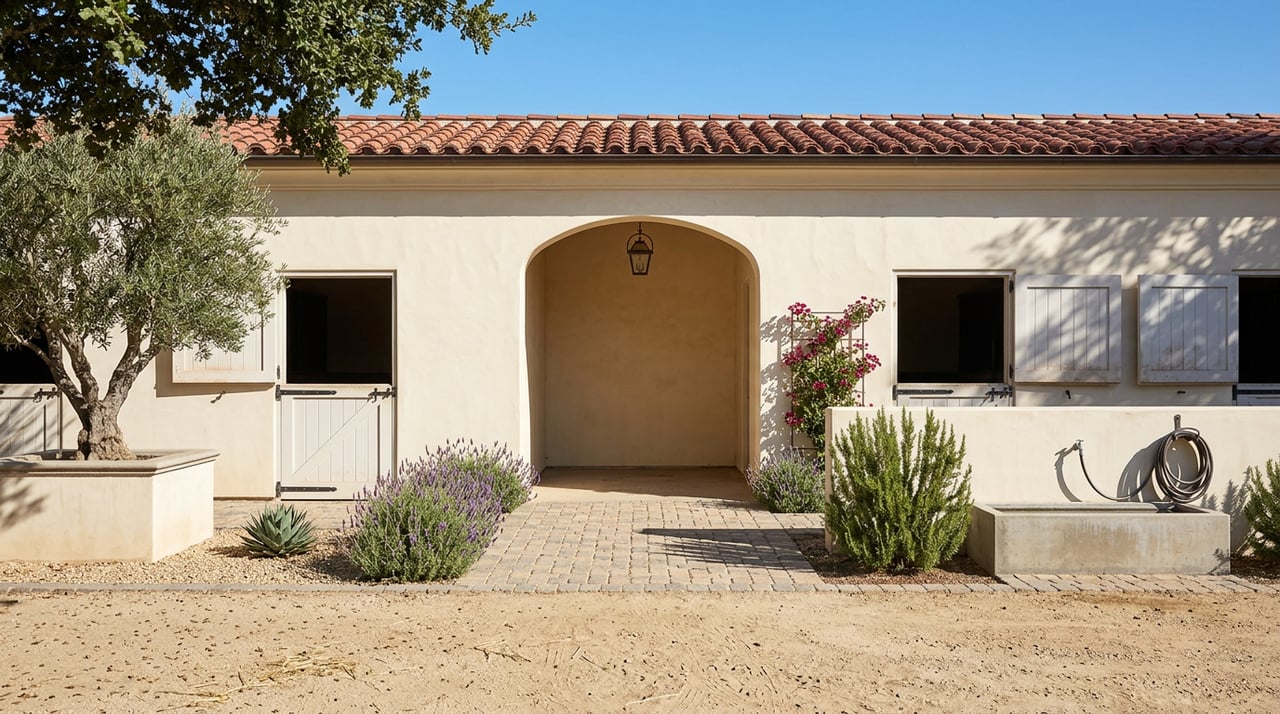
When you tour a ranch or horse property, look closely at the equestrian systems and layout. Key elements include barns and foaling stalls, arenas and round pens, paddocks and turnout areas, and pasture fencing. Water supply to troughs and hydrants, standby power for pumps, and wash racks with proper drainage are also important. Safe hay storage, a clean tack room, defined manure management, and any staff housing should be part of your review.
Typical upkeep and budgets
Operating costs vary widely by care level, herd size, and whether you board or self‑manage. Industry guides place basic self‑care per‑horse costs in the low thousands per year, with full‑service programs higher; use local feed, veterinary, and farrier rates to refine your estimate. For a primer on typical horse care expenses, review this national overview and then price locally. (How much does it cost to own a horse?)
Fencing costs depend on terrain and material. Electrified rope or tape and high‑tensile options are generally on the lower end per linear foot, while vinyl board and wood board are mid to higher. Arena costs swing based on grading, base materials, drainage, and footing. The best approach is to get two or three local contractor bids tailored to your site.
Manure and wash water must be managed to protect groundwater and surface water. Larger operations may need engineered containment or composting systems, or periodic hauling. Confirm that current practices align with County and Regional Water Board policies, and budget for improvements if needed.
A buyer’s due‑diligence checklist
Documents to request from the seller
- Recorded deed and current title report, including easements and water agreements
- Parcel map and APN details
- Zoning designation with LUDC citations and any Williamson Act contract documents (County LUDC reference; APAC overview)
- Permits for barns, arenas, employee housing, and other ag structures
- Well permits, well log, pump specifications, recent water‑quality results, and the latest pump test (County EHS wells and private water systems)
- Septic/onsite wastewater system records and maintenance history
- Any GSA notices, reporting requirements, or fee schedules affecting the parcel (CMA Groundwater Sustainability Plan)
- Fire‑hazard status and any defensible‑space reports (CAL FIRE FHSZ map)
Inspections and reports to commission
- Attorney‑led title and easement review, including shared well or access agreements
- Well pump test and independent lab water‑quality analysis
- Septic evaluation and soils or perc test if you plan to expand
- Structural checks on barns, arenas, and electrical systems
- Fencing inventory with repair or replacement estimates
- Fire‑risk assessment and a written defensible‑space plan
Questions to ask local agencies
- County Planning & Development: exact zoning, AG‑II subtype, permit path for stables and arenas, and whether the Agricultural Enterprise Ordinance affects your planned uses (County LUDC reference)
- Environmental Health Services: well and septic permit history, inspection dates, and any enforcement items (County EHS wells and private water systems)
- Local GSA contacts: whether the parcel is inside a management area and what monitoring, fees, or pump limits apply (CMA Groundwater Sustainability Plan)
- Water purveyor: whether district service is available, and if there have been supply interruptions or advisories (Santa Ynez River Water Conservation District)
- County Fire or CAL FIRE: parcel’s FHSZ and the defensible‑space or building standards that will apply
Common red flags worth deeper review
- No well log or recent pump test for a property on a private well
- Signs of septic failure or missing permit history
- Unpermitted barns, arenas, or housing
- Williamson Act contract that limits your intended non‑agricultural uses
- Parcel in a Very High fire‑hazard zone that may affect insurance or construction plans
- GSA notices about excess pumping or planned restrictions
Next steps
Every ranch or equestrian property in Santa Ynez is unique. Your best first 30 days should focus on confirming zoning and any Williamson Act conditions, understanding water supply and groundwater rules, pulling the parcel’s fire‑hazard designation, and ordering well, septic, and structural inspections. Round that out with real quotes for fencing, arena work, and any upgrades you plan.
If you want discreet, senior‑led guidance from a team that understands Santa Ynez equestrian properties, we are here to help. For a private consultation tailored to your goals, connect with Paige Marshall.
FAQs
What should I know about AG‑I vs AG‑II zoning in Santa Ynez?
- AG‑I and AG‑II set different permitted uses and permit paths for equestrian facilities, so confirm the exact zoning symbol, minimum parcel size, and LUDC sections that apply to your parcel. (County LUDC reference)
Does the Agricultural Enterprise Ordinance allow farmstays or riding operations?
- On eligible AG‑II parcels starting January 10, 2025 (inland areas), the AEO allows certain small‑scale agritourism uses like farmstays or commercial horseback riding if agriculture remains the primary use and standards are met. (AEO overview)
How do I check if a ranch is in a GSA and subject to pumping rules?
- Identify the management area for the Santa Ynez River Valley basin and ask the local GSA about any reporting, monitoring, or fee requirements tied to your parcel. (CMA Groundwater Sustainability Plan)
What due diligence is essential for wells and septic systems on horse properties?
- Get the well log, permits, a recent pump test, water‑quality lab results, and septic permit history, then confirm with County EHS that there are no open issues. (County EHS guidance)
How does wildfire hazard affect a Santa Ynez ranch purchase?
- CAL FIRE’s Fire Hazard Severity Zone maps influence building standards, defensible‑space work, and often insurance, so pull your parcel’s designation early in the process. (FHSZ map)
What should I budget for equestrian upkeep in Santa Ynez?
- Costs depend on care level, herd size, feed and hay pricing, fencing type, and arena specs, so use industry guides as a baseline and get two or three local contractor bids. (Horse care cost overview)