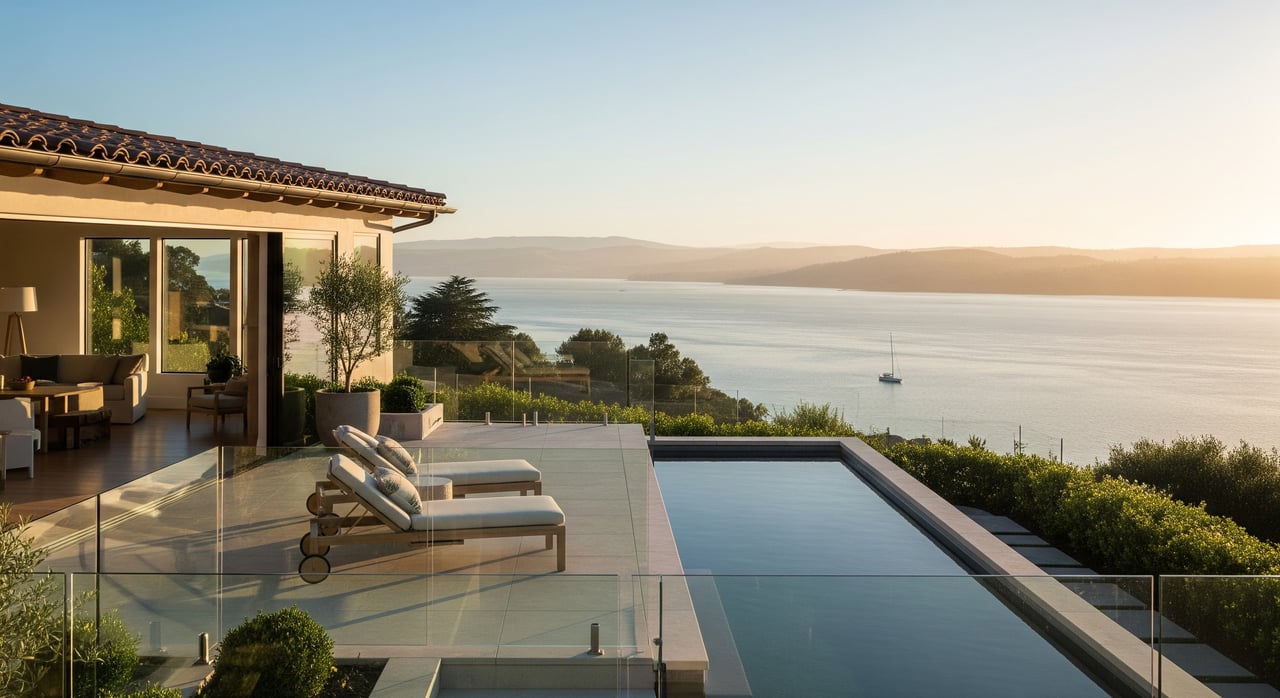
Is that ocean view truly as good as it looks in the photos? If you are considering a home on Santa Barbara’s Riviera, you know the view is part of the value. You want the kind of panorama that feels timeless, not a peek that disappears behind a roofline or the morning marine layer. In this guide, you will learn how to evaluate a Riviera view like a pro, from elevation and orientation to on-site tests and design choices that preserve what you love. Let’s dive in.
What shapes a Riviera ocean view
Elevation and horizon distance
Elevation drives the size and depth of your view. A higher vantage point lifts your line of sight over rooflines and trees and can place you above low clouds on many days. A useful rule of thumb for horizon reach is simple: distance to the geometric horizon in miles is about 1.22 times the square root of your height in feet.
That means even small elevation gains make a difference. A rise of a few dozen feet can shift a partial view into a broader coastal sweep. Confirm property elevation with tools like Google Earth, county GIS, or a survey so you know what the site can deliver.
Orientation and sun
Which way the home faces shapes everything from what coastline you see to how the sunsets look. Many Riviera properties open south to west toward the Santa Barbara Channel. Lots with southerly to westerly aspects tend to offer wider coastal views, though the exact best direction depends on your specific lot and nearby terrain.
Orientation also affects light and heat. West-facing rooms capture afternoon sun and sunsets. South-facing spaces often feel brighter for longer. Match the view and sun to how you plan to use each room.
Sightlines and obstructions
Views live or die on angles. A higher vertical angle to the horizon is harder to block. Lower angles are more sensitive to chimneys, roof ridges, and trees. The horizontal field of view matters too. A wider angle reads as a panorama. A narrow slot can feel framed.
On the Riviera, microtopography is the wild card. Small ridges, knolls, and gullies can change a view lot by lot. A home on a slight rise may see over everything. An adjacent parcel a few feet lower may not. Vegetation and building massing add more variables.
Weather and seasonality
Coastal conditions shape what you see and when. The late spring to early summer marine layer, often called June Gloom, can sit over the ocean in the mornings and sometimes all day on cooler days. Haze, humidity, and wildfire smoke can reduce clarity in summer. Winter storms lower cloud bases, then often clear the air after fronts pass.
If you value long-range views of the Channel Islands, check visibility across seasons and at different times of day. Morning, midday, and sunset can feel like different homes.
Upper vs. Lower Riviera views
Upper Riviera strengths and trade-offs
- Strengths: Panoramic vistas over the city to the Channel and, on clear days, the islands. More consistent clearance above rooflines and trees. Sunsets often visible above the townscape.
- Trade-offs: More wind exposure, longer drives and more steps, and higher costs for access or construction. You are farther from the shoreline.
Lower Riviera strengths and trade-offs
- Strengths: A closer relationship to the shoreline and urban amenities. Views can feel more immediate, with more visible coastal detail when clear.
- Trade-offs: Views are easier to block with neighboring structures or vegetation. The marine layer reaches these elevations more often. Noise from coastal roads can be more noticeable.
Remember, these are patterns, not promises. Lot-specific slope, aspect, and nearby buildings set the final outcome. Two neighbors can have very different outlooks.
How to pre-screen from home
Before you tour, spend an hour with mapping tools. It will save time and sharpen your questions.
- Check elevation and 3D rooflines in Google Earth or a county GIS viewer; tilt the view to simulate sightlines.
- Use sun-path tools to preview where morning and afternoon light will be in winter and summer.
- Review seasonal climate summaries for the marine layer and visibility patterns so your expectations match the season.
What to check on-site
Seeing the view at the right times is crucial. Try to visit more than once.
- Go early morning to test the marine layer, midday for clarity, and at sunset for color and glare.
- Bring simple tools: a compass app for view direction and a clinometer app to measure the vertical angle to the horizon and to nearby obstructions.
- Take high-resolution photos and panoramas from actual seating and standing heights in key rooms and on decks. Repeat from potential remodel locations.
- Walk the property edges to test future deck or window placements.
- Note trees, roof ridges, chimneys, and utility poles. Check whether adjacent lots are buildable.
- Pay attention to wind, surf noise, and salt spray. Salt can affect maintenance, especially on railings and hardware.
Quantify your view potential
Simple measurements help you assess permanence and risk.
- Record site elevation. Compare it with nearby ridges or rooflines to see what your horizon could include.
- Use a clinometer to measure the vertical angle to the horizon and to potential blockers. A small angle means the view is more sensitive to growth or new construction.
- Estimate the impact of tree growth or trimming. Your measurements guide conversations with an architect or arborist.
- Apply the quick horizon formula again to compare two homes at different elevations. A higher site can meaningfully expand the visible ocean distance.
Design choices that preserve views
Windows and layout
Give your best views to the rooms you use most. Large picture windows, floor-to-ceiling glass, and corner windows amplify a panorama. Add operable windows nearby for ventilation when fog lifts. Balance view glass with comfort. More glass means more solar gain and can change how you cool or heat the home.
Decks and railings
Glass railings keep sightlines clean but need regular cleaning in coastal conditions. Low-profile designs reduce visual clutter. If you add a roof or shade, consider how overhangs might clip high-angle views. Align deck seating with the widest part of the panorama. Place focal points where sunsets or harbor views are centered.
Materials and maintenance
Coastal salt accelerates corrosion. Choose stainless fasteners, coated aluminum, and composites designed for marine environments. Plan for a maintenance schedule that includes washing, protective coatings, and periodic hardware replacement.
Massing and review
Additions or exterior changes often require city review in Santa Barbara. Expect design feedback on window size, deck projection, and visual impact. Planning early helps you keep what you love about the view while meeting neighborhood standards.
View protection and permitting basics
California does not guarantee a private right to a view. In Santa Barbara, views are typically addressed through local rules, design review processes, and, in rare cases, recorded easements between neighbors. Do not assume a view can never change without confirmation.
Parts of the coast fall within the California Coastal Zone. Projects in those areas may require coastal permits in addition to city or county approvals. This can affect deck size, glazing, and siting.
Practical steps:
- Ask for recent permits and design approvals that involve nearby lots.
- Verify height limits and buildable envelopes with planning staff.
- If view protection is critical, explore options like a view easement with a neighbor. These are uncommon and require agreement, but they are the clearest long-term tool.
A quick buyer checklist
- Before touring: Confirm elevation, lot orientation, and neighboring rooflines in 3D.
- On-site: Visit at sunrise, midday, and sunset; take panoramas from real seating and standing heights.
- Measure: Record compass direction and vertical angles to the horizon and to obstructions.
- Inspect: Trees, chimneys, roof ridges, and utility poles; note if adjacent lots are vacant and buildable.
- Comfort: Wind, noise, and salt exposure; privacy from the street and neighbors.
- Permits: Ask about nearby approvals, height limits, and whether the property is in the Coastal Zone.
- Materials: Check railings, window frames, and exterior hardware for corrosion resistance and cleaning demands.
Your ocean view should feel effortless every day, not just on a perfect afternoon. With a clear plan, careful measurements, and the right preparation, you can secure a Riviera home that delivers the panorama you want in every season.
Ready to walk through these checks on a specific property or design a plan to preserve the view you already have? Reach out to Paige Marshall for a private, concierge-level consultation.
FAQs
What defines a great Riviera ocean view?
- Elevation, south-to-west orientation, wide sightlines, and minimal obstructions combine to produce a broad, consistent panorama toward the Santa Barbara Channel.
How does the marine layer affect what I see?
- Late spring and early summer mornings often bring low clouds that obscure the ocean and islands, which usually thin by midday but can linger on cool days.
Upper vs. Lower Riviera: which has better views?
- Upper areas more often clear rooflines and haze for panoramas, while lower areas feel closer to the shoreline but are more view-sensitive to structures and the marine layer.
Can I legally protect my view in Santa Barbara?
- There is no general right to a view; protection depends on local rules, design review, and, in rare cases, recorded view easements negotiated with neighbors.
What simple tools help me evaluate a view?
- Use Google Earth for elevation and 3D, a compass app for direction, a clinometer app for vertical angles, and your camera for panoramas at seated and standing heights.